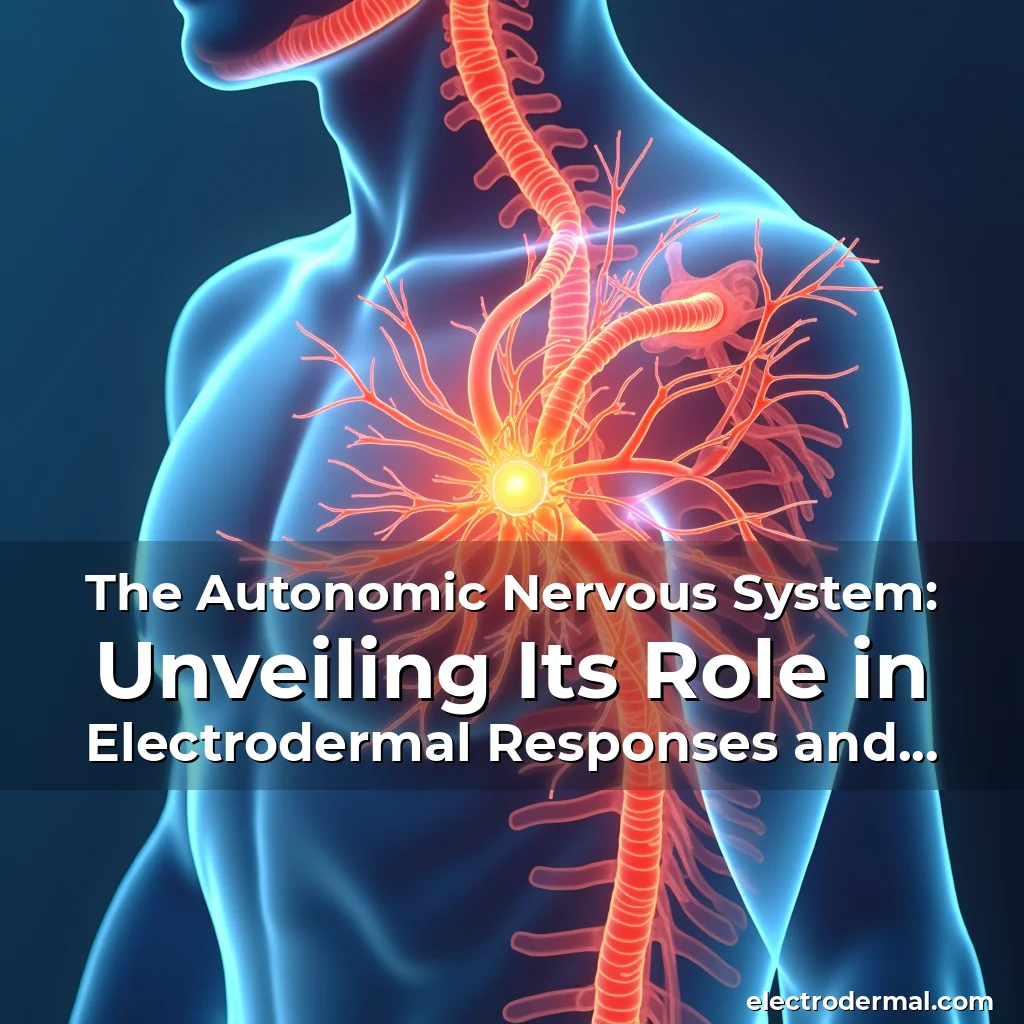
The Autonomic Nervous System: Unveiling Its Role in Electrodermal Responses and Human Physiology
The autonomic nervous system is an intricate network that governs essential involuntary functions such as heart rate, blood pres This complex system operates without conscious control, ensuring our bodies function seamlessly under various conditions.
In particular, its influence extends beyond basic physiological processes by playing a crucial role in electrodermal activity—measurable changes in skin conductivity that reflect emotional states and stress levels. Understanding how these systems interconnect can provide profound insight into human health and wellness practices.
Anatomy and Structure of the Autonomic Nervous System
The autonomic nervous system comprises two primary divisions: the sympathetic and parasympathetic nerves. These divisions work in tandem to regulate bodily functions that maintain homeostasis—the body’s ability to sustain stable internal conditions despite external fluctuations.
The sympathetic division acts as the ‘fight-or-flight’ response mechanism during times of perceived threat or danger. It prepares the body for rapid action by increasing heart rate, dilating pupils, and redirecting blood flow away from non-vital organs towards muscles.
In contrast, the parasympathetic division promotes restorative activities through mechanisms known as’rest-and-digest.’ It slows down heart rate, stimulates digestion, and encourages relaxation responses necessary for recovery after periods of heightened alertness.
Both branches originate from distinct regions within the central nervous system but converge at peripheral nerve endings where they exert their effects across different organ systems throughout the body.
- Sympathetic Nerves: Originate mainly from thoracolumbar segments of spinal cord; responsible for mobilizing energy resources.
- Parasympathetic Nerves: Arise primarily from craniosacral areas; focused on conserving energy while promoting regeneration and maintenance functions.
Functions Regulated by the ANS
Beyond managing immediate survival responses linked with fight-or-flight scenarios, the autonomic nervous system oversees numerous other critical operations including cardiovascular regulation, respiratory adjustments based on physical demands, and gastrointestinal motility patterns dependent upon dietary intake and psychological factors.
Detailed examination reveals that each component plays specialized roles: Sympathetic activation elevates cardiac output via enhanced sinoatrial node stimulation whereas Parasympathetic influence lowers it back toward baseline values following stressful episodes.
Cardiovascular Control Mechanisms
Ventricular contraction frequency significantly increases due to adrenergic receptor stimulation caused by noradrenaline released from sympathetic neurons innervating myocardial tissues.
This elevated state ensures adequate perfusion rates reach vital organs especially when confronted with acute challenges requiring swift reactions, thereby maintaining overall circulatory efficiency amidst varying environmental stimuli.
Pulmonary Regulation Processes
Airway diameter modulation occurs primarily through bronchodilation induced by beta-adrenergic agonists secreted by activated sympathetics affecting smooth muscle cells lining tracheobronchial tree structures.
Conversely, cholinergic pathways mediated by vagus nerve fibers induce bronchoconstriction which aids optimal gas exchange capacities particularly relevant during sleep cycles characterized by decreased metabolic requirements.
Electrodermal Activity and the Autonomic Nervous System
Electrodermal activity refers to measurable variations in electrical conductance occurring along epidermis layers correlated closely with sudomotor function governed predominantly by sympathetic outflow pathways.
Gaining deeper understanding regarding relationship between EDA signals and underlying neurophysiological processes enables development of advanced biofeedback techniques aimed at enhancing self-regulation abilities among individuals seeking improved mental clarity and emotional stability.
Measuring Electrodermal Responses
EDA measurements typically involve placing electrodes strategically positioned over palmar surfaces enabling detection of minute current flows resulting from eccrine gland secretion triggered selectively by emotional arousal events.
These readings serve not only diagnostic purposes related to psychophysiological assessments but also therapeutic applications wherein real-time monitoring facilitates guided relaxation exercises designed specifically for anxiety management protocols.
Applications in Stress Management Techniques
Clinical trials have demonstrated efficacy of combining EDA tracking alongside mindfulness meditation sessions leading to significant reductions observed both subjectively reported distress scores and objectively measured galvanic skin resistance indices indicating lower sympathetic tone levels post-intervention.
Furthermore, integrating wearable technology capable of continuous EDA surveillance allows practitioners greater flexibility implementing personalized intervention strategies tailored precisely according to individualized autonomic profiles established initially during assessment phases.
The Impact of Chronic Stress on the Autonomic Nervous System
Prolonged exposure to chronic stressors disrupts normal functioning patterns inherent within ANS architecture ultimately culminating in dysregulation manifesting clinically as hypertension disorders, insomnia symptoms, and impaired cognitive performance outcomes.
Chronic activation of sympathetic pathways coupled with diminished parasympathetic reactivity results in persistent hyperarousal states contributing substantially toward development of cardiovascular diseases amongst high-risk populations frequently encountering occupational hazards involving prolonged mental strain.
Physiological Consequences of Dysregulated ANS Functionality
Hypertension emerges as prominent consequence associated with sustained elevation of systemic vascular resistance exacerbated further by endothelial dysfunction attributable partially to oxidative stress generated continuously under chronic sympathetic dominance.
Insomnia becomes increasingly prevalent condition observed commonly among patients exhibiting disrupted nocturnal cortisol rhythms indicative of altered hypothalamo-pituitary-adrenal axis interactions potentially influenced indirectly by aberrant ANS signaling cascades.
Strategies for Restoring Balance Within the ANS
Implementing structured breathing exercises incorporating diaphragmatic ventilation techniques effectively activates parasympathetic reflexes counteracting excessive sympathetic engagement otherwise detrimental to long-term wellbeing.
Mindfulness-based interventions grounded theoretically in acceptance commitment therapy frameworks demonstrate robust evidence supporting their utility in mitigating maladaptive coping behaviors often perpetuating cycle of chronic stress experienced daily by modern society members.
The Role of Neurotransmitters in Modulating Autonomic Functions
Neurochemical messengers play pivotal roles shaping dynamic interactions occurring constantly within ANS circuitry influencing diverse aspects ranging from vasomotor control mechanisms up to visceral organ contractions regulated rhythmically depending upon circadian influences.
Norepinephrine serves dual purpose acting simultaneously as neurotransmitter facilitating synaptic communication plus hormone circulating freely within bloodstream modulating widespread physiological adaptations required adapting rapidly changing environments encountered regularly by organisms inhabiting terrestrial ecosystems.
Acetylcholine’s Dual Influence Across Divisions
While acetylcholine predominantly mediates actions attributed largely to parasympathetic branch through nicotinic and muscarinic receptors located abundantly throughout effector tissues targeted selectively by preganglionic fibers originating centrally.
Interestingly enough however, same molecule exerts contrasting effects elsewhere notably at adrenal medulla where stimulation induces release of adrenaline amplifying global excitatory potentials initiated originally by sympathetic efferents coursing through postganglionic terminals contacting target sites distributed systematically throughout entire organism.
Dopamine’s Emerging Roles Beyond Traditional Paradigms
Traditionally considered exclusive feature belonging exclusively to dopaminergic pathways resident primarily within basal ganglia structures governing voluntary movements; recent discoveries reveal unexpected contributions dopamine makes influencing autonomic regulatory processes particularly concerning reward-seeking behaviors intertwined inevitably with motivational drives compelling individuals engage repeatedly in habitual activities reinforcing neural plasticity advantageous evolutionarily speaking.
Emerging research suggests potential links existing between dopaminergic modulation and regulation of gut microbiota composition possibly explaining why certain psychiatric conditions co-occur frequently alongside gastrointestinal disturbances suggesting existence yet unexplored connections spanning multiple biological domains previously thought separate entirely.
Autonomic Nervous System Disorders and Their Implications
Disorders impacting functionality of autonomic nervous system lead invariably toward compromised quality of life marked distinctly by symptoms such as orthostatic hypotension, urinary retention issues, sexual dysfunction concerns, and abnormal sweating patterns deviating considerably from normative ranges expected normally.
Diagnosis involves comprehensive evaluation employing standardized tools including tilt table testing procedures measuring hemodynamic responses elicited artificially simulating positional shifts inducing transient episodes mimicking natural occurrences experienced spontaneously outside clinical settings.
Possible Causes Behind Development of Dysautonomias
Genetic predispositions account partially for susceptibility developing idiopathic forms characterized absence identifiable etiologies precluding definitive attributions solely genetic inheritance alone.
Environmental exposures featuring toxic substances capable damaging neuronal integrity contribute appreciably toward pathogenesis process especially evident cases arising secondary complications stemming autoimmune diseases attacking erroneously healthy tissue mistakenly identified wrongly as foreign antigens warranting immune response directed destructively against them inadvertently harming innocent bystander cells critically involved sustaining homeostatic balance crucially maintained vigilantly ceaselessly throughout lifespan.
Treatment Approaches Targeting Symptom Relief
Pharmacological agents targeting specific receptors implicated prominently involved disease progression represent conventional approaches utilized routinely managing manifestations arising from malfunctioning ANS components necessitating symptomatic relief irrespective causal origins determining initial presentation.
Lifestyle modifications focusing dietary alterations supplemented appropriately electrolyte balances combined regular exercise regimens aiming enhance cardiovascular fitness collectively contribute synergistically improving functional capacity gradually restoring equilibrium progressively over time period extending several months minimum required achieving noticeable improvements perceptible visibly observable.
Future Directions in Research and Technological Advancements
Ongoing investigations seek unravel mysteries surrounding precise molecular mechanisms orchestrating complex interactions transpiring dynamically throughout vast networks constituting entirety of autonomic nervous system apparatus.
Advances utilizing cutting-edge imaging modalities permit unprecedented visualization capabilities revealing microscopic structural changes undetectable conventionally allowing earlier identification risk factors precipitating future deterioration trajectories enabling preemptive measures preventing escalation reaching irreversible stages before irreparable damage accrues permanently altering fundamental physiological processes irrevocably.
Personalized Medicine and Genetic Profiling
With advent genomic sequencing technologies now accessible affordably providing complete blueprint detailing exact sequence nucleotide bases composing human genome offers tremendous opportunities tailoring treatments precisely matching unique genetic signatures present every individual uniquely distinguishing one person another.
Identifying polymorphisms associated heightened vulnerability experiencing adverse drug reactions informs clinicians selecting most suitable medications minimizing likelihood encountering untoward side effects maximizing therapeutic benefit obtained safely efficiently without compromising patient safety paramount concern guiding decisions made throughout care delivery continuum.
Integration of AI Technologies Enhancing Diagnostic Accuracy
Artificial intelligence algorithms trained extensively analyzing massive datasets containing historical medical records enable accurate predictions identifying early warning signs preceding onset disorders likely to develop sooner rather than later if left untreated allowing timely interventions averting progression toward severe complications otherwise inevitable without proactive management strategies implemented promptly.
Machine learning models capable detecting subtle anomalies concealed within voluminous information streams extracted automatically from electronic health record systems facilitate streamlined workflows reducing burden placed upon healthcare professionals enabling them concentrate efforts addressing pressing matters prioritizing urgent needs ahead less critical ones deferred temporarily until subsequent appointments scheduled accordingly.
Conclusion
The autonomic nervous system remains a cornerstone of human physiology, intricately woven into our everyday experiences and health outcomes. By understanding its structure and function, we gain powerful tools for diagnosing, treating, and preventing a wide array of conditions.
To harness the full potential of this knowledge, consider exploring advanced training programs focused on neurophysiology or participating actively in ongoing studies examining novel therapies emerging rapidly within biomedical sciences field poised revolutionize standard-of-care paradigms currently prevailing globally today.