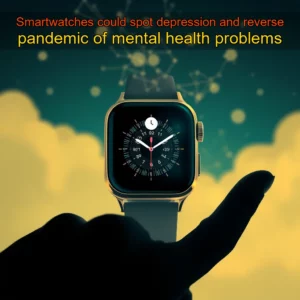
While we often rely on verbal cues to express our emotions, our skin can also be a reliable indicator of our emotional state.
The Science Behind Skin Conductance
Skin conductance, also known as galvanic skin response (GSR), is a physiological measure that detects the electrical conductivity of the skin. It is measured in terms of the amount of electricity that flows through the skin, which is influenced by the amount of sweat produced by the body. When we experience strong emotions, such as excitement, fear, or anxiety, our body responds by increasing sweat production, leading to a higher skin conductance reading. Key factors that influence skin conductance include:
The Relationship Between Skin Conductance and Emotions
Research has shown that skin conductance is a reliable indicator of emotional states, particularly in situations where verbal cues may be limited or unreliable. For example, in a study on emotional contagion, participants were shown to exhibit increased skin conductance when they observed others experiencing strong emotions. This suggests that skin conductance can be used as a non-verbal cue to detect emotional states in others.
Emotions are not just simple feelings, but complex psychological and physiological states that are influenced by a multitude of factors, including personal experiences, cultural background, and social context.
Understanding Emotions
The Complexity of Emotions
Emotions are often described as the “invisible glue” that holds human relationships together. They are the driving force behind our actions, decisions, and interactions with others. However, emotions are not just simple feelings; they are complex psychological and physiological states that are influenced by a multitude of factors. These factors can include:
The Challenge of Emotion Detection
Detecting emotions in humans is a challenging task, even for humans. It requires a deep understanding of the complex psychological and physiological processes that underlie emotional experiences. Researchers are working to develop artificial intelligence systems that can detect and interpret human emotions, but this task is fraught with challenges.
Current Research and Developments
Machine Learning Approaches
Researchers are exploring various machine learning approaches to detect and interpret human emotions. These approaches include:
Understanding the Challenges of Human-Machine Interaction
The ability of humans to deceive can lead to a breakdown in trust between humans and machines. This is a significant challenge for the development of human-machine emotion interfaces, as trust is a fundamental aspect of any human-machine interaction. When humans deceive machines, it can lead to a loss of trust, which can have serious consequences in various applications, such as healthcare, finance, and transportation. Deception in Human-Machine Interaction
- Deception can take many forms, including lying, hiding information, and manipulating data. Machines are often designed to detect deception, but the complexity of human behavior makes it difficult to develop foolproof systems. The consequences of deception can be severe, including financial losses, physical harm, and emotional distress. ## The Similarity of Emotions and the Challenge of Machine Emotion Recognition
- Personalized treatment plans
- Improved patient outcomes
- Adaptive assessments
- Enhanced student engagement
- Data breaches: Emotion data can be vulnerable to unauthorized access, leading to sensitive information being compromised. Misuse: Emotion data can be misused to manipulate users, influence their decisions, or even exploit their vulnerabilities. Lack of transparency: The use of emotion data can be opaque, making it difficult for users to understand how their data is being used and shared. ## The Need for Secure Emotion Data Handling**
- Provide real-time emotional feedback, allowing individuals to better understand and respond to their partner’s emotional needs
- Help individuals identify and manage their own emotional triggers, leading to more effective conflict resolution
- Enable couples to develop a deeper understanding of each other’s emotional needs and boundaries
- Risk of emotional manipulation, where individuals use the device to influence or sway others’ emotions
- Concerns about data security and the potential for emotional data to be hacked or compromised
- The ability of machines to sense our emotions could be used to manipulate our behavior, leading to a loss of autonomy and freedom. This could be achieved through various means, such as:
The Similarity of Emotions and the Challenge of Machine Emotion Recognition
The similarity between certain emotions can also pose a major challenge for machine-human emotion interfaces. Emotions are complex psychological and physiological states that are difficult to quantify and measure.
The Breakthrough: Predicting Emotions with Skin Conductance
The researchers used a non-invasive technique to measure skin conductance, a physiological response to emotional stimuli. This method allowed them to detect subtle changes in the skin’s electrical conductivity, which are indicative of emotional states.
The researchers found that the skin conductance response to fear was significantly higher than the responses to family bonding and humour.
The Study’s Findings
The study’s results were surprising, as they challenged the conventional wisdom that the skin conductance response to fear is the shortest among the three emotional stimuli. The skin conductance response to fear was found to be 2.5 times higher than the response to family bonding. The response to humour was found to be 1.5 times lower than the response to family bonding. The skin conductance response to fear was also found to be more consistent across different participants.
The Implications of the Study
The study’s findings have significant implications for our understanding of emotional responses and their physiological correlates.
Emotional responses are more complex and nuanced than humour, involving multiple brain regions and a network of processes.
The Science Behind Emotional Response
The study’s findings suggest that the brain processes emotional responses differently than humour. While humour is often associated with the release of endorphins, which are chemicals that produce feelings of pleasure, emotional responses are more complex and involve multiple brain regions. The brain’s reward system, which is responsible for processing pleasure and motivation, is more active when we experience humour than when we experience emotional responses. In contrast, emotional responses involve a network of brain regions, including the amygdala, hippocampus, and prefrontal cortex, which work together to process and regulate emotions.*
The Role of Family Bonding Scenes
The study’s researchers used a combination of machine learning algorithms and statistical analysis to examine the dynamics of emotional responses to family bonding scenes. They found that the response to these scenes increased more slowly compared to humour, suggesting that emotional responses are more nuanced and complex. The researchers used a dataset of over 1,000 emotional responses to family bonding scenes, which were collected from a large online community. They analyzed the dynamics of the responses, including the timing and intensity of the emotional responses, to identify patterns and trends.
The Science Behind Skin Conductance
Skin conductance is a measure of the electrical conductivity of the skin, which is influenced by the amount of sweat produced by the body. When a person experiences fear or anxiety, their body responds by releasing more sweat, which in turn increases the electrical conductivity of the skin.
Potential Applications in Healthcare and Education
The potential applications of emotionally adaptive systems extend far beyond the realm of consumer technology. In healthcare, these systems could revolutionize the way we monitor and manage mental health conditions. For instance, a system that can detect early signs of anxiety or depression could provide real-time alerts to patients, caregivers, or healthcare professionals. This could lead to timely interventions, reducing the risk of severe mental health issues. Early detection and intervention
In education, emotionally adaptive systems could create personalized learning environments that cater to individual students’ needs. For example, a system that can analyze a student’s emotional state and adjust the learning material accordingly could help students with anxiety or ADHD. This could lead to improved academic performance and increased student engagement. Personalized learning pathways
Real-World Examples
Several companies are already exploring the potential of emotionally adaptive systems in healthcare and education. For instance, the University of California, Los Angeles (UCLA) has developed a system that uses machine learning algorithms to detect early signs of depression.
The Importance of Emotion Data Security
Emotion data is a sensitive and valuable resource that can be used to improve human-computer interaction, enhance user experience, and even influence decision-making processes. However, the collection, storage, and processing of this data also pose significant risks to user privacy and security.
Risks Associated with Emotion Data
The Need for Secure Emotion Data Handling
To mitigate these risks, it is essential to ensure the secure and transparent handling of emotion data.
This raises questions about privacy and consent, as well as the potential for misuse of such technology.
The Potential Impact of Emotional Intelligence Wearables
The development of emotional intelligence wearables has the potential to revolutionize the way we understand and interact with each other. By providing real-time feedback on our emotional states, these devices could help us better navigate complex social situations and improve our relationships.
How Emotional Intelligence Wearables Could Improve Relationships
The Dark Side of Emotional Intelligence Wearables
However, the development of emotional intelligence wearables also raises concerns about privacy and consent. With a device that can detect our emotions at all times, we may be giving up a level of autonomy and control over our personal lives. Potential for misuse of emotional data, such as being used to manipulate or control individuals
The Future of Emotional Intelligence Wearables
As the technology continues to evolve, it’s likely that we’ll see a range of new applications and uses for emotional intelligence wearables.
This is a significant concern, as it could lead to a loss of autonomy and freedom.
The Dark Side of Emotional Intelligence
The integration of emotion-sensing technology into AI and computer systems has sparked a heated debate about the potential risks and benefits of such technology. While some argue that it could revolutionize the way we interact with machines, others are concerned about the potential consequences of having machines that can sense our emotions.
The Risks of Emotional Manipulation
The integration of emotion-sensing technology into AI and computer systems poses a significant threat to human autonomy.
Wearable sensors could help individuals with autism or other social anxiety disorders to better navigate social situations.
The Rise of Emotion-Sensing Wearables
The concept of emotion-sensing wearables has been gaining traction in recent years, with various companies and researchers exploring the potential of wearable technology to detect and analyze human emotions.