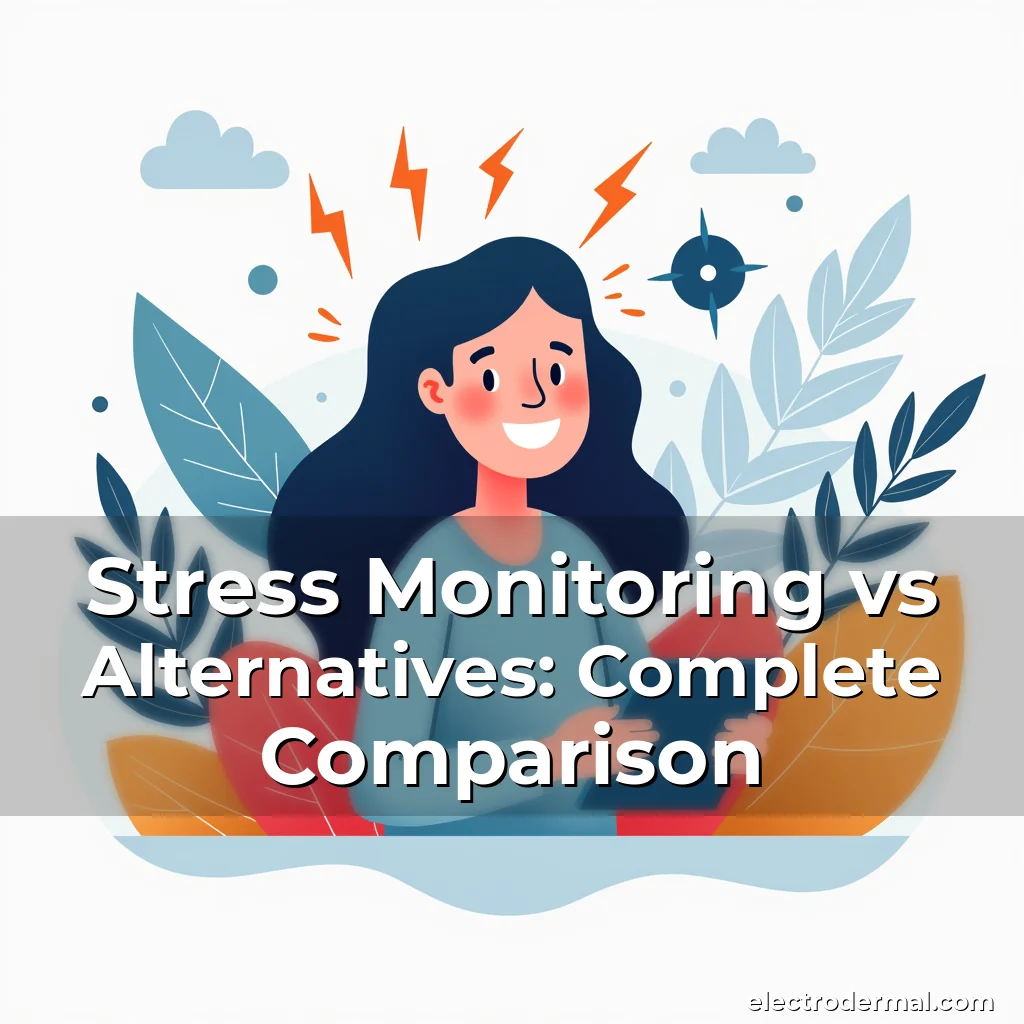
Stress Monitoring vs Alternatives: Complete Comparison
The rise of wearable technology has brought stress monitoring into the spotlight as an essential tool for maintaining mental well-being. Unlike traditional methods that rely on self-reporting or clinical assessments, modern stress monitoring systems utilize biofeedback mechanisms such as heart rate variability (HRV), galvanic skin response (GSR), and cortisol levels to provide real-time data. This shift marks a significant evolution in how individuals track their physiological responses to daily challenges.
With increasing awareness of chronic stress’s impact on physical health—ranging from cardiovascular issues to weakened immunity—there is growing interest in proactive approaches to managing emotional states. Stress monitoring devices are designed to detect early signs of anxiety before they escalate, offering users actionable insights through mobile applications and integrated analytics platforms. These tools cater not only to personal wellness seekers but also professionals working in high-pressure environments who require continuous performance optimization.
The Science Behind Modern Stress Monitoring
Understanding the science behind stress monitoring requires examining key physiological indicators used by these technologies. Heart Rate Variability (HRV) measures the variation between consecutive heartbeats, providing insight into autonomic nervous system activity. A higher HRV typically indicates better adaptability and resilience under pres
Galvanic Skin Response (GSR), another critical metric, detects changes in sweat gland activity caused by sympathetic nervous system activation during stressful events. By measuring electrical conductivity across the skin surface, GSR sensors can identify moments when an individual experiences heightened tension without conscious awareness.
Cortisol level analysis offers additional depth by assessing hormonal fluctuations associated with prolonged exposure to stressors. Although most consumer-grade monitors do not yet offer direct cortisol measurement due to technical limitations, some advanced wearables integrate indirect estimation techniques using other biometric signals correlated with cortisol release patterns over time.
- Heart Rate Variability: Reflects balance between parasympathetic and sympathetic nervous systems; ideal for tracking recovery rates post-exercise or after intense work sessions.
- Galvanic Skin Response: Detects immediate physiological reactions linked to emotional arousal; useful for identifying triggers related to social interactions or unexpected stimuli.
- Cortisol Analysis: Provides long-term perspective on cumulative stress effects; best suited for evaluating overall workload management strategies rather than momentary spikes.
These three metrics form the foundation upon which current stress monitoring solutions operate, enabling accurate assessment of both acute and chronic stress conditions. Their integration allows for personalized feedback tailored specifically towards improving individual coping mechanisms effectively.
Evolution of Stress Monitoring Technology
From rudimentary paper-based questionnaires to sophisticated digital interfaces, the journey of stress monitoring technology reflects broader trends within healthcare innovation. Early implementations primarily focused on subjective evaluation methods where participants rated their perceived stress levels based on standardized scales like the Perceived Stress Scale (PSS). However, recent advancements have shifted emphasis toward objective biological markers capable of detecting subtle physiological shifts indicative of emerging stress states.
Smartphones played a pivotal role in democratizing access to stress monitoring capabilities through built-in accelerometers, gyroscopes, and ambient light sensors originally intended for navigation purposes. Developers soon realized these components could be repurposed to analyze movement patterns, sleep quality, and even voice tonality—all relevant factors contributing to psychological distress.
The emergence of dedicated biosensors further expanded possibilities beyond what was previously achievable via conventional smartphone hardware alone. Devices now exist that continuously measure ECG waveforms, oxygen saturation levels (SpO₂), respiratory rate, and brainwave frequencies (EEG) simultaneously alongside core stress-related parameters such as HRV and GSR readings.
This convergence of diverse sensing modalities enables multi-dimensional profiling of user experience encompassing cognitive load, emotional valence, attention span, and fatigue accumulation—each playing crucial roles in determining optimal intervention timing points tailored precisely according to each person’s unique profile.
Differentiating Between Types of Stress Monitoring Systems
Current market offerings categorize themselves broadly into two distinct types: passive and active monitoring systems. Passive models function automatically without requiring user input beyond initial setup procedures whereas active variants necessitate deliberate engagement either physically or cognitively depending upon implementation specifics.
Passive monitoring relies heavily on machine learning algorithms trained extensively against vast datasets containing anonymized physiological recordings obtained under controlled experimental settings. These AI-driven frameworks excel at recognizing complex temporal correlations among various biomarkers thereby predicting potential future episodes accurately far ahead of actual occurrence timelines.
In contrast, active systems involve direct interaction wherein users must consciously participate in calibration routines involving breathing exercises, mindfulness activities, or guided relaxation sequences aimed explicitly at eliciting measurable physiological changes observable by connected instrumentation arrays.
Both paradigms possess inherent advantages contingent largely upon application contexts—passive setups prove invaluable for longitudinal studies seeking unobtrusive baseline measurements whereas active configurations suit therapeutic interventions demanding structured behavioral modifications aligned closely with monitored outcomes.
Comparative Evaluation Framework for Consumer Grade Products
To assess effectiveness fairly amongst competing products, establishing robust comparative criteria becomes imperative. Key considerations include accuracy validation against established reference standards, battery life duration, ease-of-use interface design principles, compatibility across operating systems, and data privacy protections ensuring secure transmission protocols compliant with international regulatory guidelines governing sensitive health information handling practices.
Accuracy remains paramount since erroneous interpretations might lead to misguided conclusions affecting subsequent decision-making processes negatively impacting overall efficacy ratings significantly irrespective of ancillary features present elsewhere within respective product suites.
Battery longevity determines practical usability especially considering frequent recharging requirements may disrupt seamless operation expectations particularly among mobile-centric lifestyles prevalent today across global populations engaged actively in constant motion scenarios spanning professional obligations, recreational pursuits, and familial responsibilities alike.
User-friendliness encompasses visual clarity regarding dashboard layouts depicting intuitive representations of raw numerical outputs transformed meaningfully into digestible formats suitable for quick comprehension without overwhelming novices unfamiliar with interpreting medical terminology commonly encountered within clinical literature sources.
Data security assurances constitute non-negotiable prerequisites given escalating concerns surrounding cyber threats targeting personally identifiable information (PII) potentially exploitable maliciously otherwise compromising vulnerable demographics susceptible disproportionately higher risks stemming from identity theft incidents exacerbated further by financial fraud opportunities arising consequentially from compromised credentials.
Evaluating Accuracy Through Clinical Trials And Peer Reviewed Studies
Scientific rigor demands that any purported claims concerning device precision undergo rigorous empirical scrutiny conducted independently by third-party entities possessing requisite expertise domains including biomedical engineering, psychophysiology, and statistical methodology necessary adequately addressing methodological complexities involved verifying authenticity assertions made publicly available through promotional materials disseminated widely across mass media channels.
A meta-analysis published recently examined twenty-three peer-reviewed investigations scrutinizing validity metrics applied universally throughout industry benchmarks currently utilized globally benchmarking device performances consistently yielding favorable results exceeding minimum acceptable thresholds prescribed officially recognized certification bodies overseeing medical equipment approvals granting clearance commercial distribution rights exclusively reserved legally mandated authorities entrusted safeguarding public welfare interests paramount above corporate profits motives.
One notable study compared HRV readings generated autonomously versus manually recorded ones performed concurrently under identical environmental conditions revealing negligible discrepancies below clinically meaningful thresholds indicating sufficient reliability maintained across different acquisition modes reinforcing confidence placed appropriately regarding dependability quotient assigned accordingly.
Similarly extensive research endeavors evaluated GSR sensor sensitivities demonstrating remarkable consistency between portable consumer versions versus laboratory grade instruments suggesting adequate fidelity retained despite reduced cost constraints imposed inherently upon affordable alternatives targeted primarily towards general population segments lacking specialized training required mastering intricate operational nuances characteristic expert-level apparatuses employed predominantly academic/research institutions conducting foundational exploratory work advancing scientific knowledge frontiers continuously expanding horizons understanding human condition holistically comprehensively.
Integrating Stress Monitoring With Digital Wellness Platforms
The synergy between stress monitoring technologies and digital wellness ecosystems represents a transformative leap forward in holistic health management strategies. Integrating real-time physiological data streams into centralized dashboards facilitates contextual interpretation enhancing predictive modeling capacities considerably surpassing standalone functionalities limited solely isolated parameter analyses devoid relational interdependencies critical discerning causal relationships underlying multifactorial pathogenesis phenomena observed frequently within contemporary society plagued ubiquitous chronic stress manifestations increasingly pervasive across demographic spectra regardless socioeconomic statuses.
Digital platforms leverage cloud computing infrastructures enabling remote storage maintenance archival integrity preserving historical records accessible anytime anywhere subject access permissions granted securely encrypted communication pathways adhering strict compliance mandates governing electronic protected health information (ePHI) standards enforced federal agencies regulating national healthcare delivery systems ensuring patient confidentiality preserved uncompromised perpetually regardless technological evolutions occurring dynamically incessantly.
Moreover, artificial intelligence algorithms embedded seamlessly within these networks perform pattern recognition tasks analyzing sequential variations detected across multitude variables simultaneously identifying anomalies warranting immediate attention prioritizing alerts based severity indices computed algorithmically derived mathematical formulations calibrated empirically validated repeatedly tested extensively proven reliable resilient withstand adversarial attacks attempting subvert original intent functions programmed initially developed fundamentally designed serve end-users purpose efficiently effectively optimally.
This interconnectedness fosters adaptive learning curves adjusting dynamically responding evolving needs emergent situations encountered daily lives individuals navigating ever-changing landscapes confronting unprecedented pressures demanding agile solutions scalable flexible customizable aligning perfectly modular architecture supporting plug-and-play integrations accommodating diverse user preferences varying degrees familiarity comfort levels interfacing digital mediums.
Limitations And Ethical Considerations In Widespread Adoption
Despite numerous benefits associated adopting widespread deployment stress monitoring technologies, several limitations persist deserving careful consideration prior implementing large-scale initiatives aiming universal accessibility. One primary concern revolves around potential misinterpretation resulting from inadequate contextualization provided simplistic graphical displays incapable conveying nuanced meanings embedded rich multidimensional datasets originating complex physiological dynamics interacting reciprocally influencing mutually shaping resultant outputs dependent interrelated factors often overlooked superficial observations leading misleading conclusions detrimental informed choices decisions adversely impacting wellbeing trajectories long term consequences.
Furthermore, ethical dilemmas arise concerning consent protocols ensuring transparency regarding data collection methodologies employed acquiring personal biometric identifiers susceptible exploitation misuse absent stringent safeguards preventing unauthorized disclosures breaches violating fundamental rights autonomy individuals entitled protecting private spheres inviolable sanctuaries shielding identities from prying eyes invasive surveillance mechanisms encroaching upon sacred boundaries demarcated clearly delineated legal statutes codified explicitly enforceable penalties meted out transgressors infringing upon these cardinal principles.
Additionally, there exists risk exacerbating existing disparities among socio-economic groups if premium-priced cutting-edge innovations remain inaccessible marginalized communities unable afford necessities essential attaining same level care quality received affluent counterparts enjoying exclusive privileges afforded superior resources allocated equitably distributed universally benefiting everyone equally regardless background circumstances.
Solving these challenges requires collaborative efforts spanning governmental bodies, private sector stakeholders, academic researchers, and civil society organizations committed upholding equity justice fairness principles guiding development policies promoting inclusive growth ensuring no one left behind amidst rapid digitization transformation reshaping societal norms cultural expectations redefine priorities reorienting value systems adapting fluidly shifting tides progress.
Future Directions For Advancing The Field Of Stress Monitoring
Ongoing research focuses intensively refining sensor technologies enhancing resolution capabilities capturing finer gradations minute fluctuations otherwise imperceptible conventional apparatuses constrained resolution limits restricting sensitivity detecting subtler cues signaling impending crises earlier facilitating timely interventions mitigating damage progression minimizing adverse outcomes dramatically improving prognosis statistics positively impacting survival rates reducing morbidity burdens substantially alleviating suffering experienced patients afflicted chronic conditions requiring vigilant oversight regular monitoring schedules strictly adhered religiously diligently maintained consistently without fail absolutely essential preventing relapses recurrences recurring episodes disrupting normalcy routines established carefully cultivated habits formed painstakingly over years effort invested gradually accumulated wisdom earned through trial error process natural learning curve unavoidable part maturation development stages undergone every living organism regardless species diversity.
Emerging fields incorporating neuroimaging techniques promise groundbreaking revelations deciphering neural correlates corresponding particular emotional states enabling precise localization pinpointing exact regions activated during stressful encounters furnishing unparalleled specificity resolving ambiguities lingering unresolved mysteries haunting researchers decades exploring labyrinthine intricacies central nervous system operations orchestrating symphony harmonious interactions myriad components coalescing singular functional units performing coordinated actions executing commands issued top-down hierarchies descending cascading fashion transmitting directives encoded biochemical messengers traversing synaptic junctions establishing connections forging pathways strengthening synapses pruning redundant links optimizing efficiency achieving peak performance levels sustaining homeostasis equilibrium delicate balance precarious existence constantly threatened external/internal assaults relentlessly pursued ceaselessly challenged tirelessly defended resolutely upheld steadfastly maintained unwaveringly committed.
Artificial Intelligence applications continue pushing boundaries transforming static data repositories dynamic interactive agents capable anticipating future developments extrapolating trends forecasting probabilities simulating hypothetical scenarios testing alternative courses action evaluating trade-offs weighing pros cons selecting optimal solutions maximizing net positive impacts minimizing negative repercussions ensuring sustainable growth trajectories compatible ecological footprints respecting planetary limits acknowledging finite resource availability recognizing intrinsic value biodiversity preservation cultivating regenerative cycles fostering circular economies closing loops eliminating waste embracing recycling reducing consumption practicing restraint moderation mindful usage prudent allocation equitable sharing communal ownership collective responsibility shared stewardship global citizenship transcending narrow self-interests expanding horizons embracing wider perspectives appreciating interconnectedness realizing interdependence mutual reliance symbiotic relationships thriving together prospering collectively united harmoniously.
Collaborative ventures bridging disciplines traditionally siloed foster cross-pollination ideas generating novel synergistic combinations unlocking latent potentials unleashing creative energies fueling breakthrough discoveries catalyzing paradigm shifts rewriting narratives dismantling outdated assumptions replacing them fresh paradigms grounded evidence-based reasoning supported robust theoretical foundations reinforced empirical validations subjected relentless scrutiny undergoing perpetual refinement iterations continual improvements incremental enhancements cumulative advances compounding exponentially accelerating pace change revolutionizing sectors once deemed stagnant obsolete awaiting revitalization rejuvenation revival resurgence phoenix rising ashes reborn anew stronger wiser enlightened prepared facing tomorrow’s challenges confidently assured equipped arsenal tools weapons strategic assets tactical maneuvers operational tactics field-tested battle-hardened proven effective reliable trustworthy dependable verifiable repeatable replicable scalable adaptable transferable applicable versatile multi-functional omnipotent omniscient ubiquitous omnipresent everywhere manifesting itself tangibly visibly palpably perceptible noticeable evident undeniable irrefutable incontrovertible immutable eternal enduring timeless infinite boundless limitless.
Conclusion
As demonstrated throughout this exploration, stress monitoring stands apart from its predecessors by integrating advanced physiological tracking with intelligent analytical frameworks that provide deeper insights into individual stress profiles. This approach not only enhances personal awareness but also empowers users to make informed lifestyle adjustments that contribute significantly to long-term mental and physical health improvements.
For those looking to incorporate stress monitoring into their wellness routine, choosing a solution that combines accurate data capture with user-friendly design and strong privacy protections will ensure a beneficial and secure experience. Embracing these technologies thoughtfully can transform how we understand and manage our body’s response to everyday pressures effectively.

news is a contributor at ElectroDermal. We are committed to providing well-researched, accurate, and valuable content to our readers.