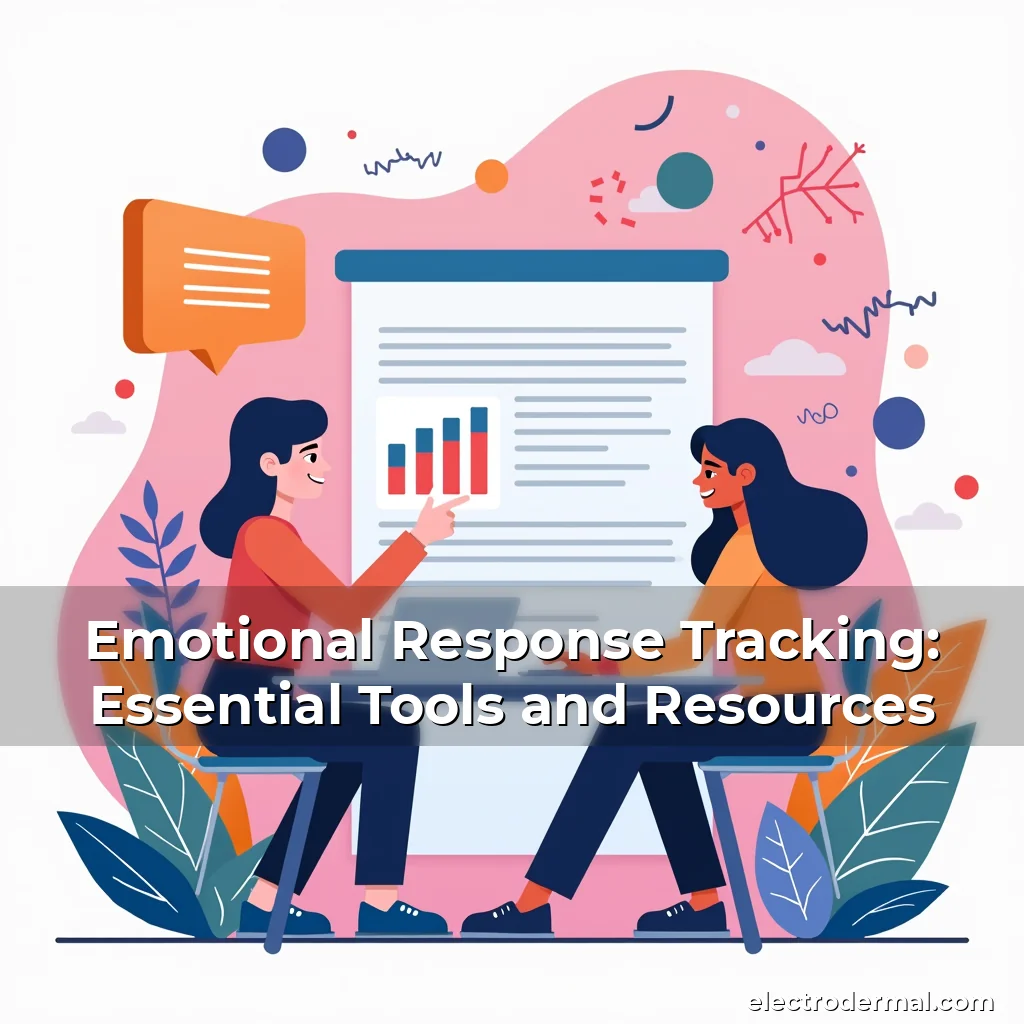
Emotional Response Tracking: Essential Tools and Resources
The ability to track emotional responses has become increasingly vital across various domains, from mental health management to user experience design. By understanding how individuals react emotionally, professionals can tailor interventions, products, and services that align better with human needs.
This guide explores the tools, methodologies, and resources available for effective emotional response tracking, focusing specifically on their relevance within the electrodermal community. Readers will discover practical applications, technological innovations, and strategies for integrating these techniques into daily life or professional practice.
Understanding Emotional Response Tracking
Emotional response tracking involves systematically monitoring an individual’s physiological and behavioral reactions to stimuli over time. This process enables researchers and practitioners to identify patterns, correlations, and triggers associated with different emotions.
Techniques range from basic self-reporting methods to advanced biometric sensors that capture real-time data. The choice of method often depends on the context, purpose, and accessibility of technology involved.
Common approaches include:
- GSR (Galvanic Skin Response): Measures changes in skin conductivity linked to emotional arousal.
- Facial expression analysis: Uses cameras and AI algorithms to detect micro-expressions indicating specific emotions.
- Heart rate variability: Tracks heart rhythm fluctuations as indicators of stress levels and relaxation states.
Each approach provides distinct advantages depending on whether the goal is continuous monitoring or momentary assessment. Understanding these differences helps users select appropriate tools tailored to their specific requirements.
The Role of Electrodermal Activity in Emotion Monitoring
Electrodermal activity (EDA), also known as galvanic skin response (GSR), plays a crucial role in measuring autonomic nervous system responses tied closely to emotional experiences. EDA signals reflect variations in sweat gland activity influenced by psychological factors such as fear, excitement, or anxiety.
Devices designed to measure EDA typically consist of electrodes placed on the fingers or palms connected via wires to a recorder unit capable of capturing subtle electrical changes occurring during emotional events. These devices vary significantly in complexity but share similar fundamental principles regarding signal acquisition and interpretation.
Advantages of using EDA-based systems include:
- Non-invasive nature: Unlike blood tests or brain scans, EDA measurements do not require physical intrusion beyond placing electrodes.
- High temporal resolution: Capable of detecting rapid shifts in emotional states within seconds rather than minutes.
- Cost-effective solutions: Many affordable options exist suitable for both personal experimentation and clinical research purposes alike.
Despite its benefits, there are limitations worth considering before adopting any particular EDA device. Factors like ambient temperature, humidity levels, and individual differences may affect accuracy rates under certain conditions.
Tools and Technologies for Effective Emotional Response Tracking
A wide array of technologies now facilitate accurate and efficient emotional response tracking through innovative hardware designs coupled with sophisticated software analytics platforms. From wearable gadgets embedded with biosensors to mobile apps incorporating machine learning models, modern tools offer unprecedented flexibility and convenience.
Wearable devices represent one category where progress has been particularly notable; examples include smartwatches equipped with pulse oximeters or headbands containing EEG electrodes intended primarily for sleep studies but applicable elsewhere too. Meanwhile, dedicated biofeedback machines remain popular choices among clinicians due to their precision capabilities.
Selecting the right tool depends largely upon three key considerations:
- Purpose: Determine whether you need general wellness monitoring versus targeted therapeutic applications requiring higher sensitivity thresholds.
- Data output preferences: Choose between visual graphs displaying trends against numerical values showing absolute readings based on what suits your analytical style best.
- Budget constraints: Establish realistic expectations concerning price ranges while balancing quality assurance standards expected from reliable manufacturers.
Additionally, compatibility features must be evaluated carefully since some newer generation wearables might lack support for third-party app integrations essential when combining multi-modal datasets collected simultaneously across several channels.
Applications Across Diverse Fields
The utility of emotional response tracking extends far beyond academic settings, finding relevance in numerous sectors including healthcare, education, marketing, gaming industries, etc., each leveraging unique aspects derived from interpreting human feelings objectively measured quantitatively.
In medicine alone, therapists utilize real-time feedback mechanisms provided by EDA monitors during exposure therapy sessions aimed at desensitizing patients suffering from phobias related fears. Similarly, educators benefit immensely from knowing which teaching materials evoke positive engagement compared against those causing confusion or disinterest.
Notable industry-specific implementations showcase versatility:
- User Experience Designers: Employ eye-tracking combined with facial coding software to optimize website layouts minimizing frustration points identified visually.
- Mental Health Professionals: Combine traditional talk therapy modalities with digital assessments offering objective metrics complementing subjective narratives reported verbally.
- Market Researchers: Conduct A/B testing scenarios involving consumers exposed briefly yet intensely enough for measurable reactions captured without direct questioning bias influencing results.
Such cross-disciplinary adoption highlights growing recognition around importance assigning equal weightage given traditionally overlooked intangible variables affecting decision making processes globally today.
Integrating Emotional Intelligence Into Daily Life Through Technology
Leveraging technological advancements allows individuals aiming enhance emotional intelligence skills necessary navigate complex interpersonal dynamics successfully regardless profession background. Simple act initiating mindfulness exercises guided virtual assistants capable recognizing distress signs potentially prevent escalation conflicts early stages.
Smart home ecosystems featuring voice activated controls could automatically adjust lighting temperatures music playlists accordingly mood detected via ambient sound recordings processed algorithmically identifying depressive symptoms warranting intervention promptly.
Personal development opportunities arise naturally here:
- Daily reflection prompts triggered after stressful episodes helping establish healthier coping strategies gradually.
- Customized meditation routines calibrated precisely matching current emotional states enhancing effectiveness significantly.
- Social interaction enhancement suggestions generated dynamically according relationship history stored securely cloud databases ensuring privacy maintained always.
These functionalities demonstrate potential transforming passive observers active participants shaping own emotional landscapes proactively instead merely reacting externally imposed circumstances randomly.
Ethical Considerations Surrounding Data Collection Practices
With increasing reliance automated systems collecting sensitive psychophysiological information raises critical questions regarding consent protocols transparency measures implemented protecting participant autonomy rights throughout entire lifecycle handling personally identifiable biological markers digitally.
Organizations developing commercial grade emotion detection solutions must prioritize establishing clear opt-in procedures explaining exactly what types of data being gathered why they matter ultimately deciding whether proceed further participation voluntarily.
Vital ethical guidelines emphasize following core tenets:
- Anonymization techniques employed wherever possible reducing risk identity theft breaches despite encryption safeguards applied standard operating procedure.
- Data retention policies strictly enforced limiting storage duration post study completion unless explicit permission granted otherwise indefinitely.
- Independent audits conducted regularly verifying compliance regulatory frameworks governing biomedical research ethics globally recognized institutions.
Failure adhering minimum acceptable benchmarks erodes public trust undermining credibility future endeavors irrespective technical merits showcased initially attracting attention initially.
Future Trends Shaping Evolution Of Emotional Response Analysis Techniques
Ongoing breakthroughs neuroscience artificial intelligence promise revolutionize field enabling unprecedented granularity depth previously unimaginable. Innovations currently underway hint towards emergence next-generation interfaces seamlessly blending physical world digital environments creating immersive experiential contexts ideal exploring abstract conceptual constructs theoretically impossible achieve conventional means.
Neuroprosthetics interfacing directly neural pathways provide tantalizing glimpse possibilities awaiting realization soon though significant hurdles remain surmount before widespread deployment feasible safely ethically responsibly.
Emerging areas likely dominate discourse upcoming years:
- Crossmodal integration experiments merging auditory visual tactile sensory inputs simultaneously generating holistic perceptual representations more faithful reality itself.
- Quantum computing architectures accelerating pattern recognition speed permitting near instantaneously adaptive responses environmental stimuli encountered unexpectedly suddenly.
- Biodegradable sensor networks implanted subcutaneously dissolving naturally body eliminating concerns long term maintenance costs associated conventional external attachments.
While speculative nature inherent forecasting accurately predicting trajectories technological revolutions remains challenging still prudent engage actively discussions shaping directions taken collectively society determining priorities pursued collaboratively.
Conclusion
Emotional response tracking stands at intersection cutting-edge science everyday applications impacting profoundly diverse facets contemporary existence. Whether seeking deeper self-understanding pursuing improved outcomes work relationships cultivating empathy communities, availability robust toolkit empowers individuals professionals alike harness latent capacities residing universally accessible dimensions consciousness harnessed constructively beneficially.
To begin your journey effectively, consider experimenting with simple GSR devices alongside journal entries documenting corresponding feelings experienced concurrently. Over time, this dual methodology refines intuition abilities discern nuances underlying seemingly straightforward situations revealing hidden layers meaning previously unnoticed.

news is a contributor at ElectroDermal. We are committed to providing well-researched, accurate, and valuable content to our readers.