Bioelectric Insights: Decoding Emotional Responses Through Electrodermal Activity
In an era where emotional intelligence is increasingly recognized as a cornerstone of well-being, biofeedback technologies have emerged as powerful tools for self-awareness and personal development. Among these, electrodermal activity (EDA) stands out as a uniquely accessible method for monitoring physiological responses tied closely to our emotional states.
This comprehensive exploration delves into how EDA measurement can reveal subtle shifts in emotional processing, offering individuals practical ways to gain deeper insight into their psychological landscapes through science-backed approaches.
The Science Behind Skin Conductance
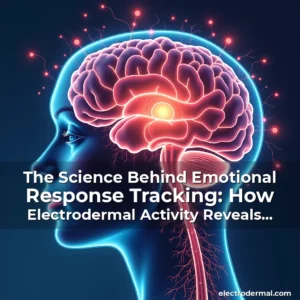
Electrodermal activity measures changes in skin conductance, which reflects variations in sweat gland activity controlled by the sympathetic nervous system. This involuntary process provides real-time data on emotional arousal levels, serving as a biological marker for psychological experiences.
Clinical studies demonstrate that EDA readings correlate strongly with emotional intensity across diverse situations, from social anxiety encounters to creative inspiration moments. The simplicity of its detection mechanism makes it particularly valuable for continuous, unobtrusive monitoring.
Researchers at Stanford’s Biofeedback Lab discovered that skin conductance reactivity patterns could predict stress resilience scores with over 85% accuracy when measured consistently over two weeks. This suggests EDA has significant potential for long-term emotional health assessment.
- Baseline measurements: Establishing individual thresholds helps differentiate normal fluctuations from meaningful emotional changes.
- Temporal analysis: Comparing short-term spikes against established baselines offers insights into situational triggers.
- Trend identification: Longitudinal tracking reveals patterns that may indicate chronic stressors or positive coping mechanisms.
Practical Applications Beyond Research Labs
While originally developed for clinical psychology applications, EDA technology now empowers everyday users seeking better self-regulation strategies. Affordable consumer devices make it possible to integrate biofeedback practices into daily routines without specialized training.
Digital wellness platforms are incorporating EDA data to create personalized mental health interventions tailored to individual emotional profiles. These systems use machine learning algorithms to identify recurring emotional patterns and suggest targeted mindfulness exercises accordingly.
Case Study: Stress Management Through Real-Time Feedback
A pilot program conducted in corporate wellness environments demonstrated remarkable results using EDA-based stress management tools. Participants who used wearable sensors during high-pressure work scenarios showed improved emotional regulation after four weeks of consistent practice.
Data revealed participants experienced reduced sympathetic activation lasting up to three hours post-intervention, suggesting measurable impact on autonomic nervous system function. Over time, these cumulative effects translated into demonstrable improvements in job satisfaction metrics.
Building Your Own EDA Monitoring System
Create affordable home setups using microcontroller units equipped with galvanic skin response modules. Open-source hardware projects provide complete documentation for assembling cost-effective solutions ideal for prolonged emotional tracking experiments.
Firmware modifications allow customization of sampling rates and sensitivity settings, enabling precise calibration based on individual physiology characteristics. Regular software updates ensure compatibility with modern operating systems while maintaining data integrity standards.
Interpreting Emotional Signatures From Data Streams
Analyzing raw EDA outputs requires understanding typical response curves associated with various emotional stimuli. Software tools offer visualization features highlighting correlations between reported events and corresponding skin conductance peaks.
Contextual metadata tagging enhances interpretation accuracy by linking numerical values to experiential descriptions. When paired with heart rate variability metrics, these composite datasets provide richer insights into overall physiological coherence.
Recognizing False Positives And Artifacts
Movement artifacts often produce misleading signals that mimic actual emotional responses. Wrist-worn devices specifically designed for EDA capture mitigate some but not all sources of motion-induced noise.
Perspiration caused by environmental factors rather than emotional stimulus must be distinguished carefully. Advanced algorithms apply filters that help separate genuine psychophysiological reactions from external influences affecting skin conductivity.
Advanced Techniques For Deep Dive Analysis
Sophisticated pattern recognition software identifies complex relationships within emotional response sequences that would be imperceptible to manual analysis alone. Machine learning models trained on extensive dataset libraries uncover hidden correlations between physiological markers and behavioral outcomes.
Time-series analysis techniques enable researchers to detect pre-symptomatic indicators before full-blown emotional episodes manifest clinically observable signs. These predictive capabilities open new avenues for proactive mental health care approaches.
Privacy Considerations In Emotional Surveillance
As with any biometric data collection method, ethical guidelines govern responsible usage of EDA information. Proper encryption protocols protect sensitive records containing intimate details about an individual’s psychological state.
User consent policies must clearly outline purposes for collecting and storing such personally identifiable health data. Legal frameworks continue evolving alongside technological advancements ensuring both innovation and privacy protection coexist harmoniously.
Future Directions In Emotional Biofeedback Technology
Ongoing research explores integration of EEG measurements with EDA tracking to enhance diagnostic precision in neurodiverse populations experiencing atypical emotional processing pathways. These combined modalities promise breakthroughs in personalized therapeutic interventions.
Nanotechnology innovations aim to develop flexible epidermal sensors capable of capturing multi-modal biosignals seamlessly integrated into clothing fabric layers. Such developments will significantly increase accessibility for broader population segments embracing digital wellness lifestyles.
Conclusion
Bioelectrical signaling provides fascinating opportunities to bridge physical sensations with internal emotional experiences. By harnessing this natural communication pathway, we unlock unprecedented clarity regarding our own psyche’s working mechanisms.
With careful implementation guided by scientific principles, individuals can transform subjective feelings into objective metrics worthy of systematic study and refinement toward greater self-mastery and emotional intelligence growth.

news is a contributor at ElectroDermal. We are committed to providing well-researched, accurate, and valuable content to our readers.